The Ultimate Guide to Comprehensible Input for Spanish (2026)
Spanish offers learners a large range of graded and native media, and its spelling is relatively consistent once you learn the main sound patterns. Resources such as Dreaming Spanish can provide visual, level-appropriate input; SubSmith can help when local video or audio does not include a usable transcript.
Why Spanish is Perfect for Input-Based Learning
Spanish is well suited to an immersion-first approach because many spelling-to-sound patterns are consistent. There are still regional pronunciations, silent letters, stress rules, and exceptions, but reading along can help connect recurring sounds with written words.
- Phonetic spelling: hear it, read it, spell it
- Massive content library (Latin America + Spain)
- Many recognizable English-Spanish cognates, alongside false friends that need context
- FSI Category I: 600-750 hours to professional proficiency
Check out our Spanish immersion roadmap to see how many hours it might take to reach your goals.
Input Hours Breakdown
The ranges below are planning estimates, not guarantees. Prior study, consistency, content difficulty, and speaking practice can move the timeline substantially.
| Level | Hours | What You Can Do |
|---|---|---|
| A1-A2 | 0-200 | Follow slow, clear speech with visual context |
| B1 | 200-400 | Understand main points of standard speech |
| B2 | 400-600 | Follow complex arguments on familiar topics |
| C1 | 600-800 | Understand extended speech without subtitles |
Best Spanish Content by Level
The secret to effective immersion is matching the difficulty of the content to your current level. If the content is too hard, it's just noise; if it's too easy, you're not growing.
Beginner (A1-A2)
YouTube Channels:
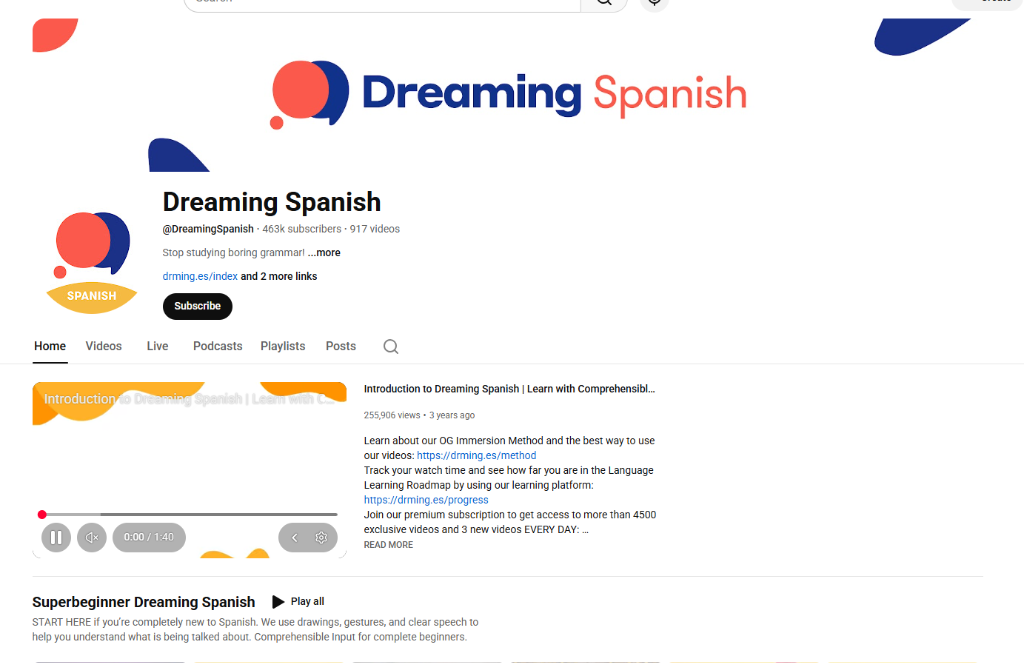
- Dreaming Spanish is the best place to start. They have superbeginner videos where you can understand the story just by watching the drawings and gestures.
- Spanish with Paul is great for getting a handle on how the language actually works.
- Easy Spanish shows you real interviews on the street so you can hear how people really talk.
TV Series:
- Destinos is an old but gold soap opera made specifically for people learning the language.
- Extra en Español is like the show Friends but with very simple and clear Spanish.
What to Look For:
- Slow, clear speech
- Visual context (gestures, props)
- Repetitive vocabulary
- Simple plots
Intermediate (B1-B2)
Netflix Originals:
- La Casa de Papel (Money Heist) is a great thriller, though they use a lot of slang from Spain.
- Elite is a modern drama where you'll hear how younger people talk.
- Club de Cuervos is a hilarious show if you want to pick up Mexican slang and fast talking.
Why Telenovelas work:
- The plots are easy to follow even if you don't know every word.
- The drama makes the new words much easier to remember.
- Try watching Yo soy Betty, la fea or Rebelde.
Podcasts:
- Radio Ambulante tells amazing true stories from all over Latin America.
- Españolistos has conversations about all sorts of things at a pace that's easier to follow.
- Duolingo Spanish Podcast mixes the story with some English to help you stay on track.
Advanced (C1+)
Native content:
- Stand-up comedy is probably the hardest stuff to understand. You need to know a lot about the culture and how people play with words.
- Regional News is a good challenge. Switch between channels from Argentina, Chile, and Spain to see how different people sound.
- Podcasts like Entiende Tu Mente (about psychology) or Solaris are great for deeper topics.
How to Learn Spanish With Movies
| Starting point | Try | Next step |
|---|---|---|
| Beginner | Dreaming Spanish superbeginner videos with gestures and drawings | Replay a short clip until the main idea is clear |
| Lower intermediate | Duolingo Spanish Podcast with mixed Spanish/English support | Note one phrase you hear repeatedly |
| Intermediate | A dubbed series with clear subtitles and replay | Use a short scene for listening and sentence review |
| Advanced | Native podcasts and unscripted regional interviews | Compare accents and keep only useful expressions |
A good test: if you can follow the main idea while still noticing unknown phrases, the movie is at the right level. Familiar stories and Spanish dubs reduce plot confusion, while native films expose you to regional speech and culture. Work with a few useful scenes instead of pausing for every unknown line.
Which Subtitles Should Spanish Learners Use?
- Spanish subtitles: best for connecting fast speech and regional pronunciation to written Spanish.
- Spanish plus English: useful when you need occasional meaning support, but avoid reading only the English line.
- Generated Spanish subtitles: useful for local films, interviews, or podcasts without a transcript; review slang, names, and difficult audio.
- No subtitles: a useful listening check once you can already follow most of the scene.
The Subtitle Problem in Spanish Content
One of the biggest hurdles in Spanish immersion is the mismatch between "Dubbing" and "Subtitles." Often, the subtitles on Netflix for a Spanish show were translated separately from the audio script, leading to confusing discrepancies.
Common Issues
- The audio and subtitles don't always match. Someone might say "ustedes" in the audio, but the subs say "vosotros".
- Local slang is often left out of official subtitles.
- Automatic captions on YouTube often get confused by fast accents.
How SubSmith Solves Spanish Transcription
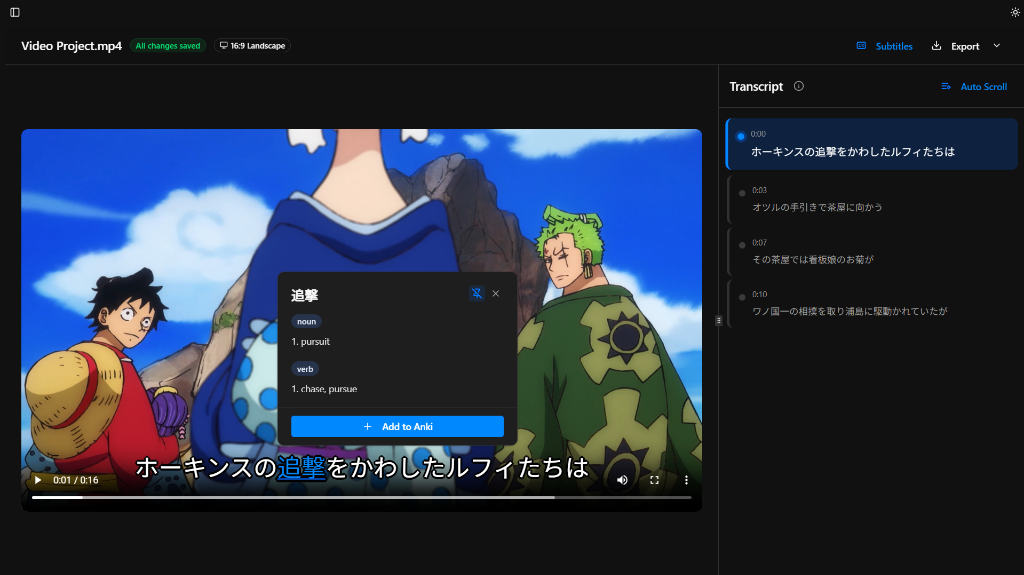
SubSmith uses Whisper to create a timestamped transcript from the audio in your local file. It gives you an editable starting point when captions are missing or do not match the dialogue; review names, slang, and difficult audio before using a line for study. The processing stays on your computer.
The Workflow
- Download content: YouTube, podcast, or local video file
- Import to SubSmith: Drag and drop into the app
- Transcribe: Whisper generates the timestamped Spanish script
- Mine sentences: Click to export to Anki with original audio
Read the research on subtitles for language learning to decide when Spanish, translated, dual, or no subtitles fit your level.
Navigating Spanish Variants
Spain (Castilian) vs. Latin American
| Feature | Castilian | Latin American |
|---|---|---|
| Pronoun "you" | Vosotros (plural) | Ustedes (plural) |
| Pronunciation "z/c" | Ci/Ce pronounced as "th" | Ci/Ce pronounced as "s" |
| Slang | Tío, mola, guay | Neta, bacán, chévere |
Which version should you learn? Most people overthink this, but it's more important to just pick one and stick with it. If you like Mexican shows, learn Mexican Spanish. Your brain will figure out the other accents once you have the basics down.
Related Guides
- What is Sentence Mining?: The methodology behind this approach
- What is Comprehensible Input?: The science of input-based learning
- Comprehensible Input for French: Apply immersion to other languages
- Anki vs Duolingo: How their roles differ in a language-learning workflow
FAQ
- Should I learn Spain Spanish or Latin American? Choose based on the people and content you expect to engage with. Castilian and Latin American varieties share the same core language, with meaningful differences in pronunciation, vocabulary, and some grammar usage.
- What is the best show for beginners? Dreaming Spanish (YouTube) for the first 100 hours, then Destinos for story-based learning with context.
- How long to reach B2 with immersion? There is no reliable universal hour count. Prior knowledge, input quality, consistency, and output practice all matter; use the ranges on this page only as planning estimates and track what you can actually understand over time.
- Can I use SubSmith for Spanish podcasts? Yes. Import any MP3 (from Radio Ambulante or similar), and SubSmith will generate the transcript for you to mine.
- What about the "voseo" in Argentina? Don't worry about it early on. If you watch Argentine content, you'll hear "vos" instead of "tú". It becomes intuitive very quickly through immersion.